


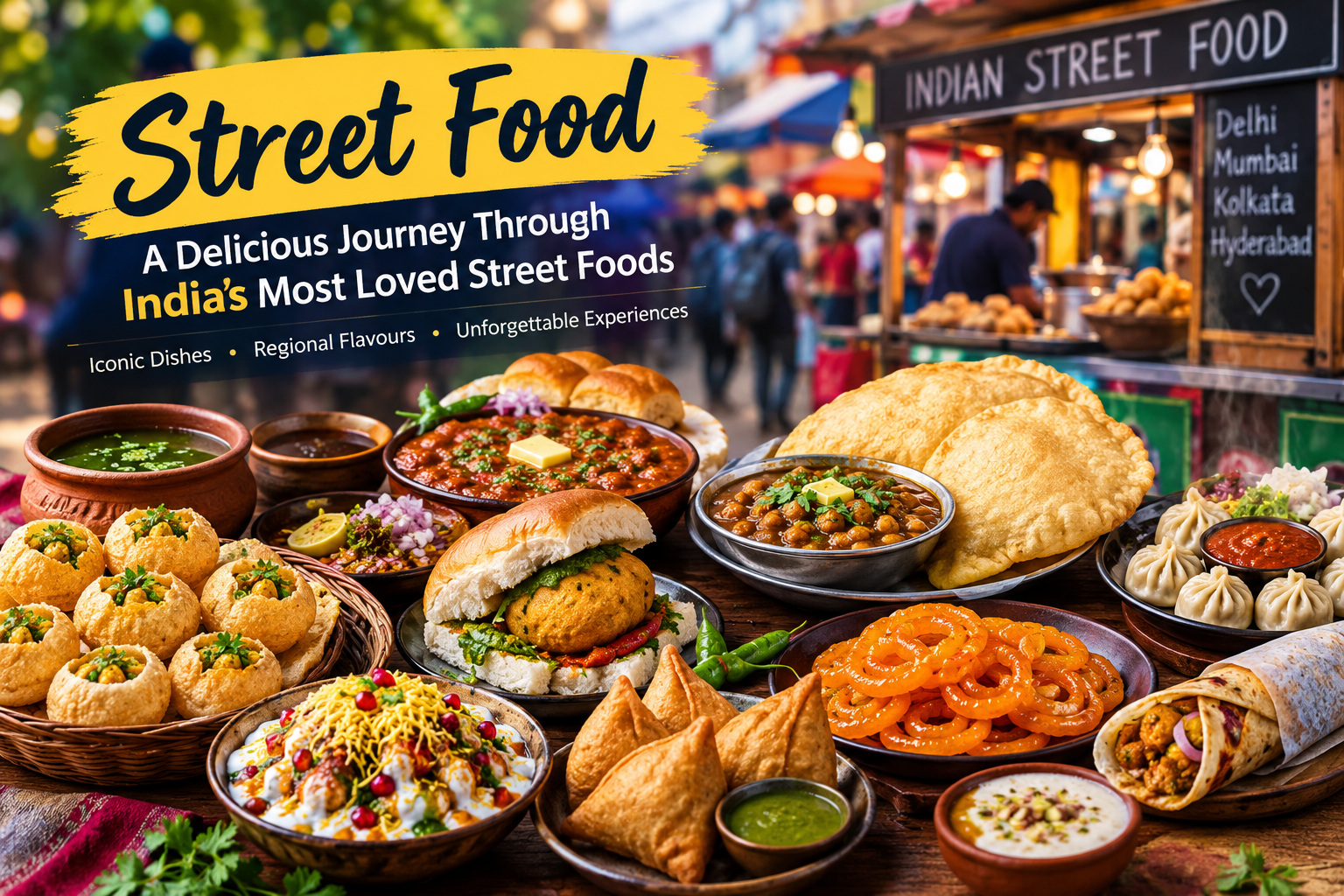
Street Food: A Delicious Journey Through India’s Most Loved Street Foods
Introduction
There is something special about street food that a restaurant menu can rarely recreate. It might be the sound of a sizzling tawa, the aroma of spices drifting through a crowded market, or the excitement of watching a vendor prepare your food right in front of you. In India, street food is more than a quick and affordable meal—it is an important part of everyday life, local traditions, and best Indian street food culture.
From a plate of spicy Pani Puri / Gol Gappa / Puchka to a buttery Vada Pav, street food represents the incredible diversity of Indian flavours. Every region has its own specialties, ingredients, cooking techniques, and ways of serving food. Delhi Street Food is known for rich chaat and hearty snacks, while Mumbai Street Food brings together iconic foods such as Vada Pav and Pav Bhaji. In Kolkata, flavours become distinctively Bengali, while Hyderabad offers its own combination of spicy snacks and traditional influences.
One of the biggest attractions of street food is accessibility. You do not need a fancy restaurant or a large budget to enjoy a satisfying meal. Local Indian street food vendors, food stalls, and Street Food Carts / Thela make delicious food available to students, office workers, families, tourists, and anyone looking for an affordable bite.
But Indian street food is not limited to a handful of famous snacks. There is an enormous world of Regional Indian best Street Food, ranging from spicy chaats and stuffed parathas to Bengali snacks, Gujarati specialties, North Indian dishes, and regional sweets.
Whether you are a lifelong street-food lover or someone discovering Indian food for the first time, exploring these dishes is one of the best ways to understand the country’s flavours.
1. The Iconic Street Foods Every Food Lover Should Try
Some street foods have become so popular that they are practically synonymous with Indian snacking.
Pani Puri, Gol Gappa and Puchka
Few foods create as much excitement as Pani Puri / Gol Gappa / Puchka. Although the names and preparations vary by region, the basic idea is familiar: crisp puris are filled with ingredients such as potato, chickpeas, spices, chutneys, and flavoured water.
The difference becomes particularly interesting when you travel. Delhi may call it Gol Gappa, Mumbai commonly uses Pani Puri, while Kolkata is famous for Puchka. The water, filling, spice level, and chutneys can all change according to local preferences.
The combination of crunchy puri, spicy water, tangy Tamarind Chutney, fresh Green Chutney, and Chaat Masala makes every bite surprisingly complex.
Chaat
Chaat is less a single dish and more a huge family of Indian street-food creations. Its magic comes from combining different textures and flavours—crispy, creamy, spicy, sweet, salty, and tangy—in one plate.
Popular versions include Aloo Chaat, Papdi Chaat, Sev Puri, Samosa Chaat, and Dahi Bhalla / Dahi Puri. Yogurt, chutneys, sev, onions, coriander, spices, and crunchy toppings can transform simple ingredients into something incredibly satisfying.
A good chaat vendor understands balance. Too much chutney can overpower the dish, while too little spice can make it flat. The best plates have layers of flavour that develop with every bite.
Vada Pav
Often associated with Mumbai, Vada Pav is one of India’s most recognizable street foods. A spicy potato fritter is placed inside a soft pav and typically accompanied by chutneys and fried or spicy accompaniments.
Its simplicity is part of its appeal. It is inexpensive, filling, portable, and packed with flavour. For many people, grabbing a Vada Pav from a busy street stall is not simply eating—it is part of the rhythm of city life.
Pav Bhaji
Another Mumbai classic, Pav Bhaji consists of a thick, spiced vegetable bhaji served with buttered and toasted pav. The vegetables are cooked together and mashed into a rich mixture, usually finished with butter, coriander, onions, and lemon.
The sound and aroma of Pav Bhaji being prepared on a large hot tawa is almost as memorable as the dish itself.
Samosa and Samosa Chaat
The Samosa is one of India’s most beloved snacks. Its crisp pastry shell traditionally holds a spicy potato and pea filling, although countless variations exist.
Eating a hot samosa with Tamarind Chutney and Green Chutney is a classic street-food experience. Take that same samosa, break it into pieces, add yogurt, chutneys, spices, sev, and onions, and you have Samosa Chaat.
This is one of the great strengths of Indian street food: one basic snack can become the foundation for an entirely different dish.
Aloo Tikki and Dahi Bhalla
Aloo Tikki is made from spiced potato patties that are cooked until crisp outside and soft inside. It can be enjoyed on its own or transformed into a plate of chaat.
Dahi Bhalla / Dahi Puri takes a different approach by introducing cool, creamy yogurt into the mix. Sweet and tangy chutneys, spices, sev, and other toppings create a refreshing contrast to the spicy ingredients.
Bhel Puri and Sev Puri
Bhel Puri is a lighter but highly flavourful combination of puffed rice, vegetables, chutneys, sev, and spices. It is particularly associated with Mumbai and is often enjoyed as a quick snack.
Sev Puri, meanwhile, uses crisp puris as a base, topped with potatoes, chutneys, onions, sev, and spices. Both dishes demonstrate how Indian street food uses inexpensive ingredients creatively.
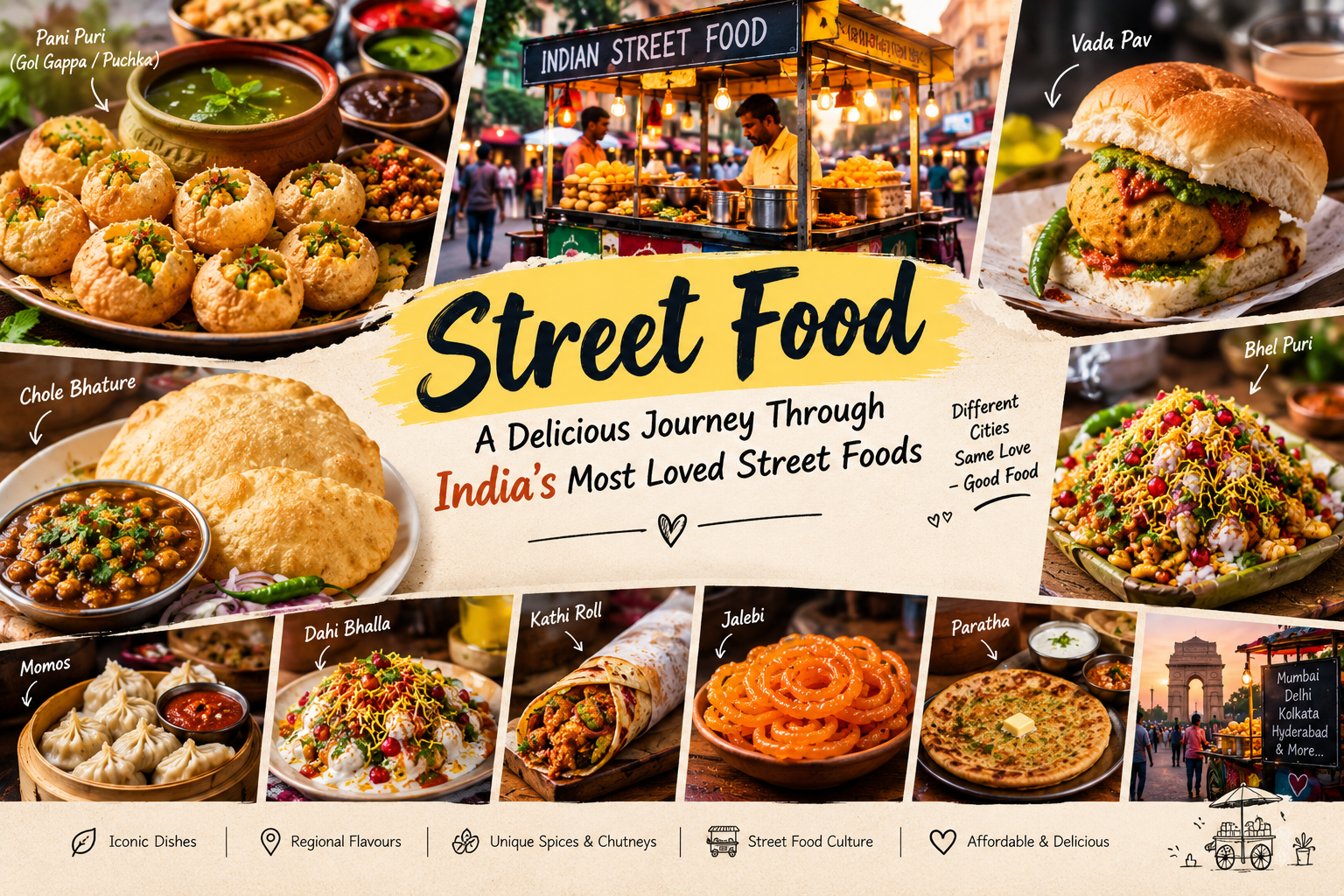
2. Regional Indian Street Food: Every City Has Its Own Flavour
One of the most fascinating things about Regional Indian Street Food is how dramatically food changes from one city to another.
Delhi and Old Delhi
Delhi Street Food is a paradise for people who enjoy bold flavours. Chandni Chowk Street Food and Old Delhi Street Food are particularly famous for their busy lanes, traditional eateries, snack stalls, and long-standing food vendors.
Here you can find everything from Chole Bhature and Chole Kulche to stuffed parathas, kebabs, chaat, and sweets.
Paratha / Stuffed Paratha is an important part of Delhi’s food identity. These parathas can be stuffed with potato, paneer, cauliflower, radish, or other fillings and served with yogurt, pickles, chutneys, or vegetables.
Chole Bhature is another popular choice. Spicy chickpeas are served with deep-fried, fluffy bhature, often accompanied by onions, pickles, and chutneys.
For something different, Chole Kulche combines spiced chickpeas with soft kulcha bread. The dish is filling, flavourful, and particularly popular as an affordable meal.
Delhi’s street-food scene also includes dishes such as Ram Ladoo, Daulat Ki Chaat, Multani Moth Kachori, and Kachori Sabzi.
Daulat Ki Chaat is especially distinctive. Unlike many spicy street foods, it is a delicate, airy sweet preparation associated with Old Delhi and traditionally enjoyed during the cooler months.
Mumbai and Its Khau Gallis
If Delhi is famous for its chaat and North Indian flavours, Mumbai Street Food has its own unmistakable identity.
The city’s Mumbai Khau Galli culture brings together quick, affordable, flavourful foods for people constantly on the move. Vada Pav, Pav Bhaji, Bhel Puri, Sev Puri, and Dabeli are among the foods commonly associated with this fast-paced food culture.
Dabeli, which originated in Gujarat but became popular in many parts of India, consists of a spiced potato filling served in a pav with chutneys, peanuts, pomegranate, and other toppings.
Mumbai’s street-food experience is also about the environment. A crowded stall, a small plate in your hand, the sound of traffic around you, and food being prepared within seconds all contribute to the experience.
Kolkata
Kolkata Street Food has a personality of its own. The city is particularly famous for snacks and dishes that combine Bengali flavours with influences from different culinary traditions.
Jhal Muri is a classic example. Puffed rice is mixed with spices, vegetables, mustard oil, peanuts, and other ingredients to create a crunchy and intensely flavoured snack.
Ghugni Chaat, made with spiced yellow or white peas, is another popular preparation. It can be enjoyed as a snack or a more substantial street-side meal.
For dessert lovers, Mishti Doi is an essential Bengali specialty. This sweetened fermented yogurt is creamy, mildly tangy, and deeply connected with Bengali food traditions.
Hyderabad
Hyderabad Street Food offers a combination of local traditions and influences from the city’s rich culinary history. The city is especially well known for spicy preparations, kebabs, breads, and snacks.
Kebabs are a major attraction for meat lovers, with different preparations offering smoky, grilled, spiced, and tender textures. Hyderabad’s food culture also demonstrates how Indian street food can overlap with traditional regional cuisine.
3. Regional Snacks, Sweets and Lesser-Known Favourites
Beyond the headline dishes, India’s street-food culture contains hundreds of regional specialties that deserve attention.
Kachori, Pakora and Regional Snacks
Kachori Sabzi is a hearty combination in which a crisp, stuffed kachori is served alongside spicy potato or other regional curry. It is particularly satisfying as a breakfast or brunch-style street meal.
Pakora / Pakode are another everyday favourite. Vegetables, paneer, onions, spinach, or other ingredients can be coated in a spiced gram-flour batter and fried until crisp.
During the monsoon, few things feel more comforting than hot pakode with a cup of tea.
Besan Chilla offers a different texture. Made primarily from gram flour and spices, it can be prepared with vegetables and served with chutneys. It is an example of how simple pantry ingredients can become a quick and satisfying street-style snack.
Chana Zor Garam, made from seasoned flattened and roasted chickpeas, is another traditional snack that delivers a combination of crunch, spice, and convenience.
Litti Chokha
Litti Chokha is strongly associated with Bihar and eastern India. Litti consists of wheat dough filled with a spiced roasted gram-flour mixture, while chokha is generally prepared using roasted vegetables such as eggplant, potato, and tomato.
The smoky flavour from roasted ingredients gives the dish a distinctive character.
It is a perfect example of why exploring street food beyond India’s biggest cities can be so rewarding. Regional foods often tell stories about local ingredients, agricultural traditions, cooking methods, and everyday life.
Matar Kulcha
Matar Kulcha combines spicy white peas with soft kulcha and a variety of onions, chutneys, spices, and garnishes. It is especially popular in North India and is another affordable meal that can be found at local food stalls.
Jalebi, Rabri Faluda and Kulfi Faluda
Street food is not only about savoury snacks.
Jalebi is one of India’s most recognizable sweets. The batter is shaped into spirals and fried before being soaked in sugar syrup. Fresh, warm jalebi has a crisp exterior and syrupy centre.
For a richer dessert experience, Rabri Faluda combines thickened sweet milk with faluda and other toppings.
Kulfi Faluda pairs traditional dense and creamy kulfi with faluda, creating a dessert that is particularly popular during warmer weather.
These desserts show the remarkable range of Indian street food—from fiery chilli and tangy chutneys to rich dairy-based sweets.
4. What Makes Indian Street Food So Special?
The popularity of street food cannot be explained by taste alone. Several factors make it an important part of Indian food culture.
Affordable and Accessible
One of the biggest advantages of street food is its affordability. Affordable Street Food allows people to enjoy satisfying meals without spending the amount they might at a conventional restaurant.
Students can grab a plate of chaat between classes. Office workers can pick up a quick snack during a break. Families can explore a local food market together. Travellers can discover regional dishes without planning an expensive dining experience.
The Role of Street Food Vendors
Behind every popular stall is an Indian Street Food Vendor who often has years of experience.
Many vendors develop their own recipes and preparation techniques. A chutney recipe may be passed through generations. A particular spice mixture may be unique to one stall. Some vendors become famous locally because customers know they can consistently deliver the same flavour.
These vendors are an important part of Indian Street Food Culture because they preserve traditional foods while also adapting to changing tastes.
Regional Spices and Chutneys
A major reason Indian street food is so flavourful is the use of Regional Spices and Chutneys.
Tamarind Chutney contributes sweetness and tanginess, while Green Chutney usually brings freshness, herbs, and heat. Chaat Masala adds a distinctive salty, sour, and spicy character that can instantly transform a simple snack.
The balance of these elements is what makes chaat so addictive. You are not tasting a single flavour—you are experiencing several flavours simultaneously.
Street Food Stalls and Thelas
Traditional Indian Street Food Stalls and Street Food Carts / Thela are designed around speed and convenience. Ingredients are often prepared beforehand, allowing vendors to assemble dishes quickly when customers arrive.
Some stalls may be tiny, with just enough space for a stove, ingredients, utensils, and a serving counter. Others have evolved into large, recognizable businesses with permanent shops and loyal customers.
The setting itself is part of the appeal. Street food feels immediate, informal, and connected to the local community.
5. How to Explore Street Food Like a Local
If you are planning a street-food tour, do not simply search for the most famous dish. Try to understand the food culture of the area.
Start with one iconic dish, then explore something less familiar. For example, in Delhi you could begin with chaat before trying Kachori Sabzi, Ram Ladoo, or a traditional stuffed paratha.
In Mumbai, try Vada Pav and Pav Bhaji, then move toward Bhel Puri, Sev Puri, or Dabeli.
In Kolkata, try Puchka, Jhal Muri, Ghugni Chaat, and Mishti Doi.
When visiting a busy food stall, look for places with a steady flow of customers. High turnover can mean ingredients are being used frequently rather than sitting for long periods. Pay attention to general cleanliness, food handling, cooking practices, and the quality of water and utensils.
Most importantly, approach street food with curiosity. A dish that looks simple may have a fascinating regional history behind it.
Conclusion
Indian street food is much more than a collection of quick snacks. It is a living part of the country’s culinary identity, bringing together regional ingredients, traditional recipes, local communities, and generations of food knowledge.
From Pani Puri / Gol Gappa / Puchka, Chaat, Vada Pav, and Pav Bhaji to Chole Bhature, Samosa, Momos, Kathi Roll, Litti Chokha, and Jalebi, there is something for almost every palate.
What makes the experience even more special is the regional diversity. Delhi Street Food, Mumbai Street Food, Kolkata Street Food, and Hyderabad Street Food each offer a different window into India’s food traditions. Places such as Chandni Chowk Street Food, Old Delhi Street Food, and a busy Mumbai Khau Galli show how deeply food is connected with city life.
So the next time you pass an inviting street-food stall, consider trying something beyond your usual order. Follow the aroma, ask the vendor what is popular, and explore a new flavour. You may discover that the best food experience is sometimes served on a small plate, from a humble Street Food Cart / Thela, right in the middle of a busy Indian street.
FOLLOW ON INSTAGRAM